
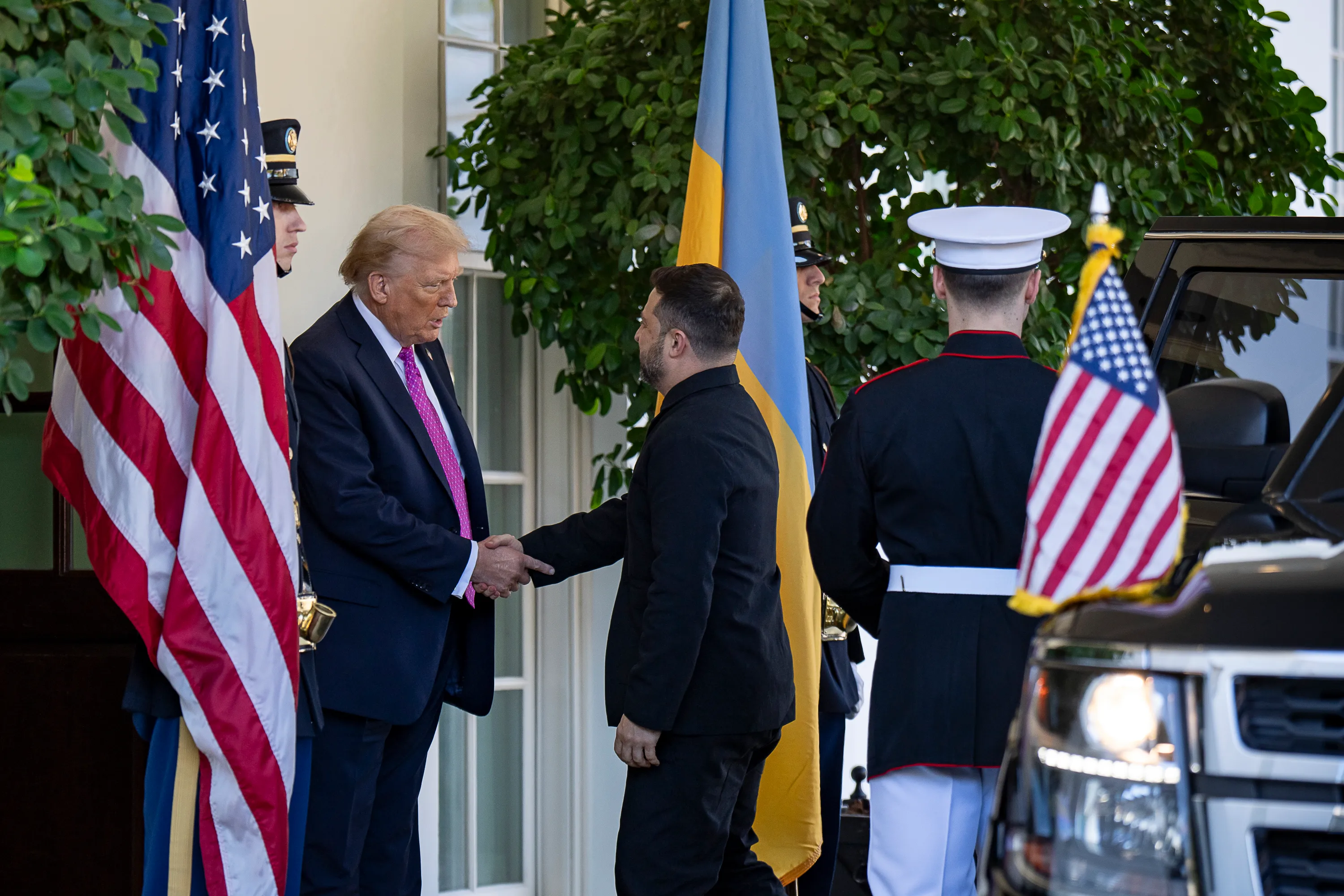
The Ukrainian president arrived at the White House on Friday for a previously scheduled meeting. The meeting had been on the calendar for two weeks. It was, on the State Department’s own description, intended to coordinate the United States’ position on continued military assistance and the diplomatic posture toward Russia.
The day before the meeting, Thursday afternoon, the President of the United States held a two-hour telephone conversation with the President of Russia, at the Russian government’s request. By the end of that call, the President had announced, on his social platform and to the wire services, that he would meet President Putin in Budapest within two weeks to discuss “ending the war.” The Ukrainian delegation, in transit to Washington, learned of the Budapest announcement from the same press releases the public was reading.
Friday morning’s bilateral was therefore conducted under conditions in which the host had already announced a parallel negotiating track with the adversary, before the guest had landed.
The pattern is one this administration has now used three times in the calendar year. In August it surfaced as the proposed “land swap” announced from the Bedminster golf course before a summit in Anchorage. In Anchorage itself the framing of the deal shifted within hours. In October the cycle repeats, with a different summit on the calendar, the same staff configuration, and the same deliverables-not-on-paper.
The Ukrainian president, by all accounts, conducted himself in the Oval Office with the discipline of a head of state who has been here before and is prepared, again, to be polite about it. Photographs released by the press pool show the standard handshake, the standard exchange. Neither side took questions at length.
Six days later the Budapest summit was canceled. The cited reason was Russian unwillingness to compromise on territorial demands. The Ukrainian government issued a brief statement of acknowledgment. There was no apology issued to Kyiv for the Friday morning posture. None was expected.
A serious country sequences its diplomacy so that its allies hear about its plans before its adversaries do. The order of operations here ran the other way.
Calmly documenting the decline.
The breakdown.
- Factual basis The sequence of events is documented in the public record.12/25
- Self-awareness The Ukrainian delegation was put in the position of being briefed on a deal already announced.5/20
- Staff containment The State Department was managing the optics in real time.8/20
- Recovery attempt The President floated a separate Zelenskyy-Putin bilat at the cancelled summit.5/15
- Public spectacle Front page of the foreign desks.11/20
Was this dumb enough?
Members can adjust the score. Become a member.